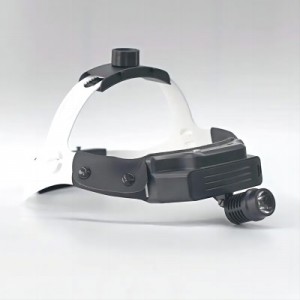
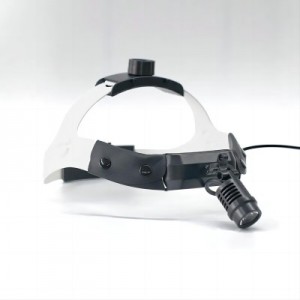
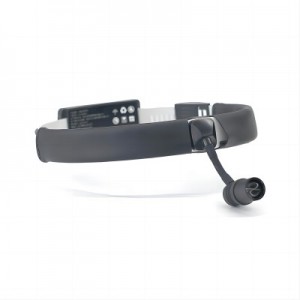
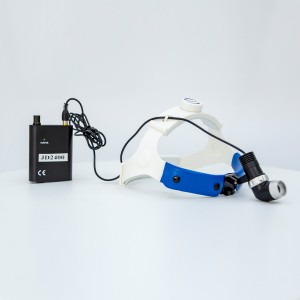
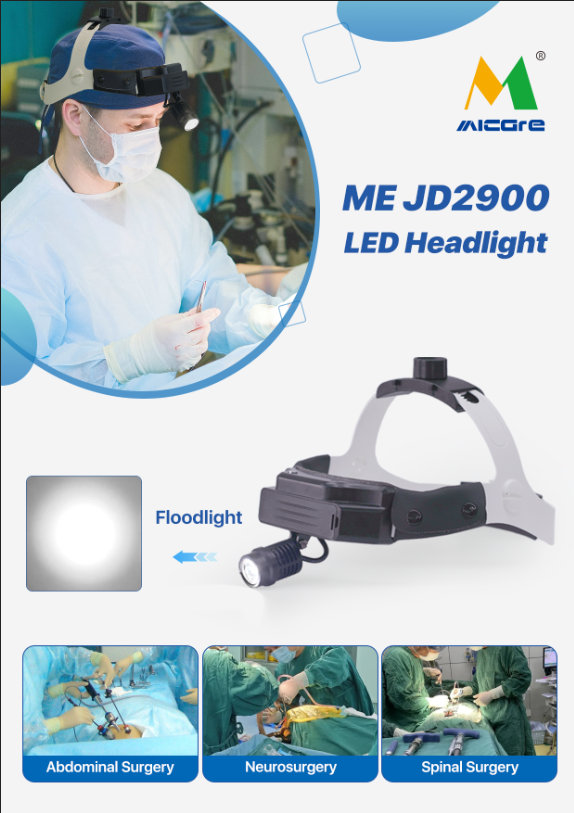
The ME-JD2900 medical headlight plays a crucial role in neurosurgery and laparoscopic surgery. Its design features precisely meet the specific lighting requirements of these two procedures:
1. Neurosurgery
Neurosurgery often involves extremely delicate and complex structures such as the brain and spinal cord.
• Requirement Characteristics:
• Extremely high-intensity, shadowless, focused illumination is required to clearly visualize tiny blood vessels, nerve bundles, and lesions in deep, narrow, or shadowed areas.
• The illumination spot must be precisely adjustable to focus on the surgical area while avoiding heat damage or distraction.
• Surgeries are often lengthy, requiring a headlight that is comfortable to wear and has a long battery life.
• Advantages of the ME-JD2900:
• High brightness (left and right): This ensures surgeons can penetrate narrow surgical corridors and clearly observe deep tissue structures, which is particularly crucial when working with tiny structures. • Adjustable Spot Size/Flood Lighting: Physicians can adjust the spot size to achieve precise focused illumination (small spot) or wider flood light (large spot) according to surgical needs. This is crucial for transitioning from macroscopic positioning to microscopic manipulation.
• Lightweight Design: Reduces the burden on the surgeon during prolonged wear, ensuring stability and comfort during surgery.
• Cold Light Source/Suitable Color Temperature: LED light sources generate low heat, preventing thermal damage to sensitive nerve tissue; the appropriate color temperature helps distinguish tissues and blood vessels of varying densities, improving surgical precision.
2. Laparoscopic and Hysteroscopic Surgery
Laparoscopic and Hysteroscopic Surgery (minimally invasive surgery) is performed through small incisions or natural cavities. The surgical field of view is relatively limited, primarily relying on laparoscopic systems. However, headlights still play an important role in assisting and inspecting procedures.
• Requirement Characteristics:
• While primary illumination relies on the laparoscope, the headlight provides high-quality auxiliary illumination for preoperative puncture positioning, incision preparation, and postoperative suturing. • For some open auxiliary procedures, or when the laparoscopic field of view is less than ideal, a headlight is needed to provide additional, clear, localized illumination.
• When the main operating room light is limited or when quick, flexible illumination is required, a headlight is the best choice.
• Advantages of the ME-JD2900:
• Wireless Design and Adjustability: The wireless/battery-powered design allows surgeons greater mobility within the operating room, free from the constraints of power cords, making it easier to perform various procedures around the operating table.
• High-Quality Auxiliary Illumination: High brightness and an adjustable light spot ensure a more focused and clearer field of view than a main operating light during auxiliary open procedures (such as establishing pneumoperitoneum, puncture, or local dissection).
• Waterproof and shock-resistant: These features ensure the reliability of the headlight in complex surgical environments, where medical environments are demanding.
Summary:
The ME-JD2900 medical headlight, with its high brightness, adjustable beam spot, lightweight design, and long battery life, perfectly meets the neurosurgery needs for microscopic, deep-section, and high-precision illumination. Furthermore, its wireless, flexible, and high-quality auxiliary lighting capabilities make it an ideal auxiliary tool for hysterectomy, abdominal surgery, and other minimally invasive procedures.
Post time: Oct-24-2025