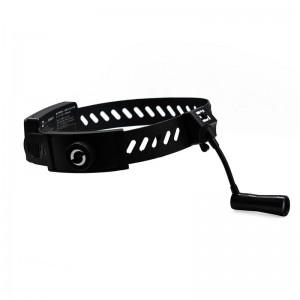
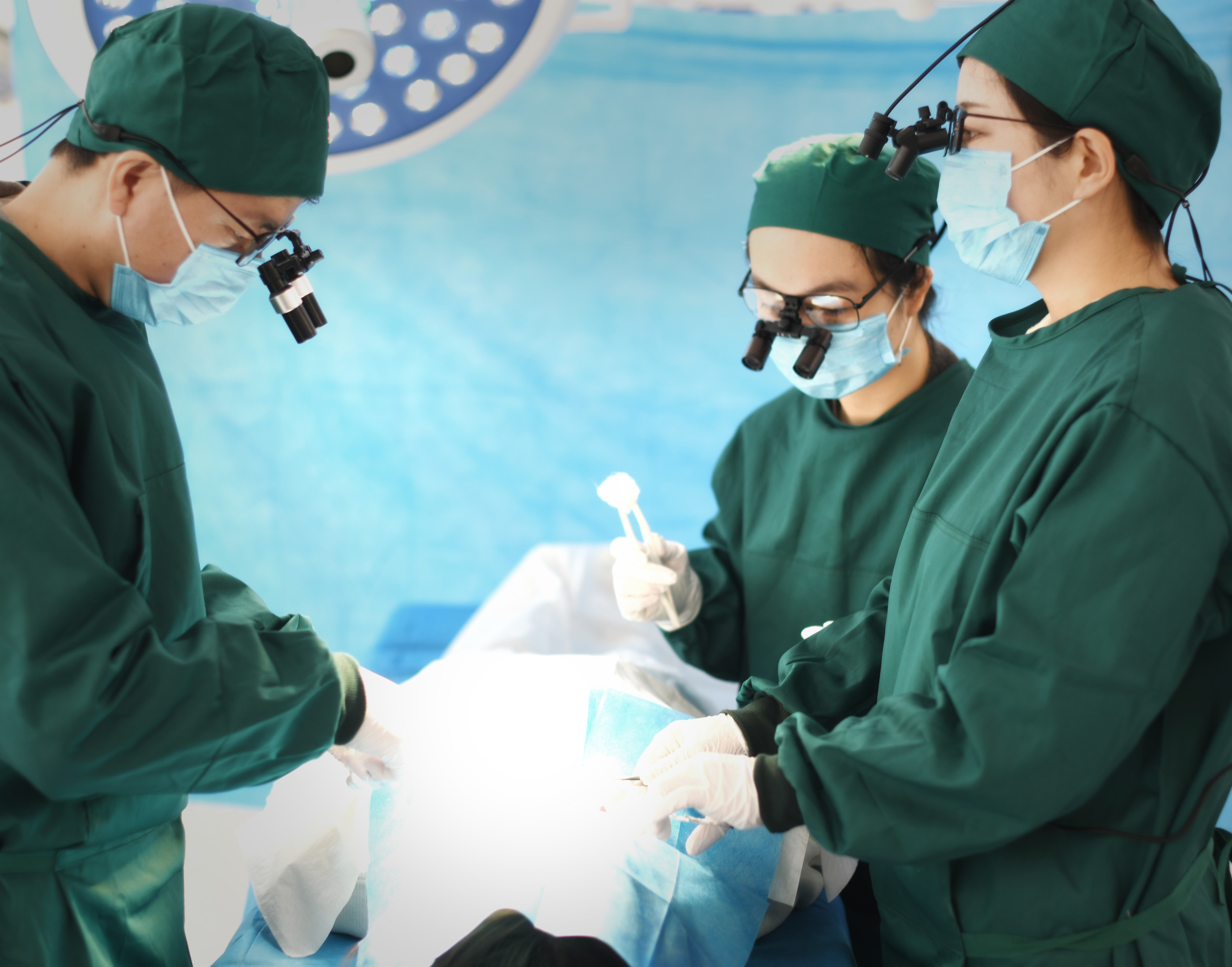
Dental loupes and headlights are two essential cornerstones of modern dentistry. They drive dental practice towards greater precision and minimally invasive procedures by providing superior visualization and improving ergonomics.
I. Dental Loupes: The Core of High-Precision Procedures
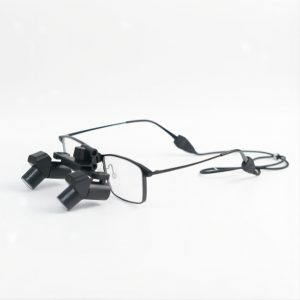
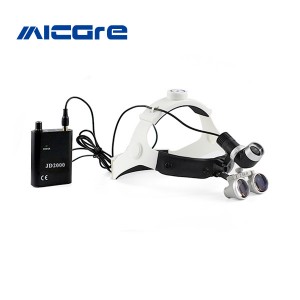
A dental loupes is essentially a small
Telescope system used to magnify the surgical field, enabling dentists to clearly capture minute details within the oral cavity.
1. Core Functions and Value
Excellent Magnification: This is the primary purpose of loupes, typically providing magnification of 2.5× to 6.0× or higher. Magnification is crucial for detecting minute caries and cracks, accurately locating root canal openings, and ensuring the tightness of restoration margins.
Improving Treatment Precision: In complex procedures requiring the utmost detail, such as implant placement, microendodontics, and aesthetic restorations, loupes are crucial for ensuring success and long-term outcomes.
Improved Occupational Health (Ergonomics): By locking the focal point at a fixed working distance, dentists are forced to maintain an upright, correct sitting posture, significantly reducing cervical and back strain caused by prolonged periods of hunched-over work.
2. Comparison of Main Types
Dental loupes are primarily classified into two optical configurations:
Type: TTL (Through-The-Lens) Built-in Type
Description: The loupes are optically embedded directly into the lens.
Advantages: Lightest, wide field of view, fixed and precise working distance, and most ergonomic.
Disadvantages: Magnification and working distance cannot be adjusted on-site, requiring a high degree of customization.
Type: Flip-Up (Flip-Up) External Type
Description: The loupes are hinged and attached to the front of the eyeglass frame, allowing them to flip upward.
Advantages: The loupes can be removed and opened at any time (for example, when communicating with patients); interpupillary distance and angle are adjustable.
Disadvantages: Typically heavier than TTL, with a forward-shifted center of gravity, which may require some adjustment for some clinicians.
3. Key Technical Parameters
When choosing the right loupes, consider the following parameters:
Working Distance: The distance between the dentist’s eyes and the working area for a clear focus. The proper distance is crucial for maintaining proper posture and is generally between 350 mm and 500 mm.
Magnification: A common starting magnification is 2.5×. For specialized or complex procedures, such as endodontics, 4.0× or higher is often used.
Depth of Field: The range of front-to-back distances within which a clear focus is maintained without head movement. A large depth of field reduces head movement and improves work efficiency.
Field of View: The area that can be clearly observed at a given magnification. Generally, the higher the magnification, the smaller the field of view.
II. Dental Headlights: Ensure Uniform, Shadowless Illumination
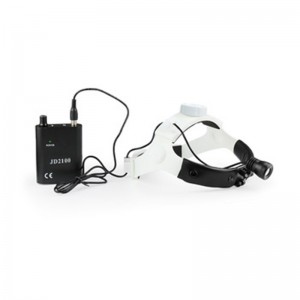
Headlights are the perfect companion to loupes, providing high-quality, coaxial illumination of the working area and serving as the “second pillar” for ensuring a clear view.
1. Core Features and Benefits
Coaxial Illumination, Eliminating Shadows: The headlamp’s light path is precisely aligned with the dentist’s line of sight (i.e., the optical axis of the magnifying glass). This allows light to penetrate deep cavities, completely eliminating the shadows often caused by traditional dental chair headlights, which are often blocked by the dentist’s head or hands, and providing uniform, glare-free illumination.
Improving Tissue Identification: Modern LED headlamps provide high-brightness white light with excellent color temperature and color rendering. This is crucial for accurately distinguishing healthy and diseased tooth tissue and for precisely matching tooth shades in aesthetic restorations.
2. Technical Features
Light Source: LED (Light Emitting Diode) is almost universally used because of its compactness, high brightness, durability, and energy efficiency.
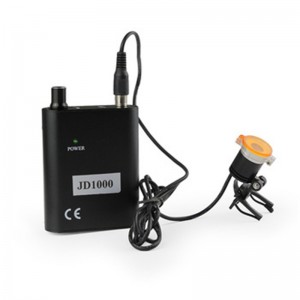
Portability: Headlamps come in both corded and cordless varieties. Cordless headlamps have built-in batteries, offering the most flexibility but requiring charging management. Corded headlamps typically carry the battery pack around the waist, providing a lighter head load but with the added burden of a power cord.
Light Spot Quality: A high-quality headlamp’s light spot should be uniform and large enough to fully cover the field of view provided by the magnifier, ensuring the entire operating area is fully illuminated.
III. Industry Significance: Towards Minimally Invasive Digitalization
The widespread adoption of magnifiers and headlamps represents a shift in dental care from the traditional “naked eye” era to high-precision, minimally invasive modern practices.
Professional Standards: They have become standard equipment for every modern dental professional and the foundation for ensuring high-quality treatment. For procedures like root canal therapy and implantology, high magnification has become the industry norm.
Career Continuity: They are more than just tools; they represent a commitment to the dentist’s professional health, effectively protecting the cervical spine, spine, and vision, and contributing to a longer career.
Technical Advancement Platform: Loupes provide dentists with the necessary precision foundation and serve as an ideal platform for transitioning to more advanced equipment, such as dental operating microscopes.
Post time: Jan-14-2026

-300x300.jpg)